Caspian Sea Nur Beach: Difference between revisions
Jump to navigation
Jump to search
| Line 56: | Line 56: | ||
=== Green/blue infrastructure === | === Green/blue infrastructure === | ||
<gallery caption=" " widths="200px" heights="150px" perrow="5"> | <gallery caption=" " widths="200px" heights="150px" perrow="5"> | ||
Revision as of 18:38, 17 May 2018
>>>back to working groups overview
| Area | Caspian Sea, North of Iran | |
| Place | Nur Caunty | |
| Country | Iran | |
| Topics | Nur Beach | |
| Author(s) | Yasaman Rahimi, Fardokht Hadji Salimi | |

| ||
Rationale
- Why do you think this case is relevant? What is your hypothesis considering the landscape challenges?
- Format: 3-4 sentences
Location and scope
You can edit this map with the map editor
A Landscape System Analysis
A.1 Landscape layers and their system context
Geomorphology, landscape units and coastal typology
-
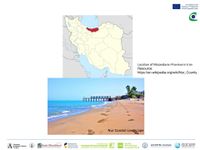 In Nur the Green & Blue are besides. Nur County by having beautiful parts of Caspian sea is one of the most important tourism regions in Iran and the touristic development of this city has been considered in the plannings of the government. Our hypothesis: Potential to be one of the largest coland tourism poles of Iran
 -
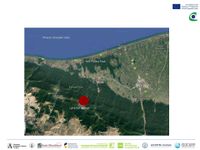
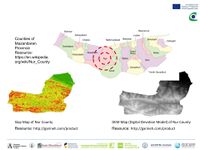 The Nur beach is located on the north of Tehran, in the Mazandaran province, phasing parts of the Caspian sea and is beside of Nowshahr, Amol and Mahmudabad provinces


Land use
-
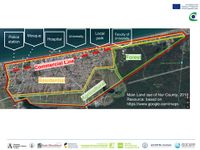 As it has been shown on this map, the main land uses are divided into four main region of Nur Forest, Residential, Agricultural and also the commercial line on the north of the city. Also the important places have been shown on the map.
 -
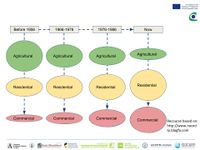 Development Process,On this diagram has been shown that how the agricultural land sue decreased over the years and instead commercial and residential land uses increased (There is low accessibility to data from 1986 until now via internet network).
 -
add a caption


Green/blue infrastructure
-
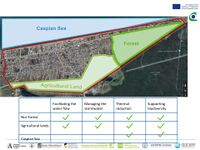 There are three main Green and Blue Infrastructure in Nur which are compared based on their influences, in the following table.
 -
add a caption

Actors and stakeholders
- Who is driving changes in this landscape? Who is affected by those changes?
- Draw a stakeholder and/or power map: Who is affected highly but with low power? Who has high power but is not affected?
-
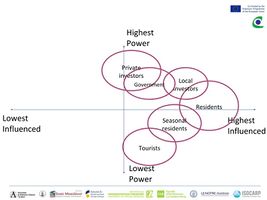 It can be said a big part of the changes in this region is caused by new constructions.Here are the explanations about some of the named groups in the following Power Map:_Private Investors: Those who invest but do not leave in Nur_Local Investors: Those who invest and leave in Nur._Seasonal Residents: Those who have a house in Nur, but they leave in other cities in most of the seasons_Tourists: Those who do not have a house in Nur and come to visit this city.

Sacred spaces and heritage
- Which places/elements hold cultural value and to whom?
- You may add a map and some images, please also explain in your caption why these elements are valuable
-
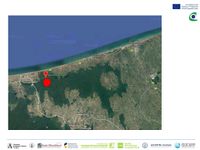 Nur forest park is the biggest natural park in midlist by 3600 ha. It holds a symbolic meaning in the area because of its location and Monumental trees.
 -
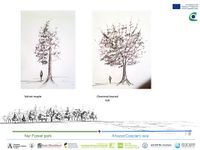 Nur forest park is located near the sea; hence arrangement of sea and forest or green and blue infrastructure together, brings a symbolic identity and sense of place there.In addition to this, there are monumental trees like Velvet maple and Chestnut-leaved oak.
 -
add a caption


Visual appearance and landscape narrative
- Which elements are essential for the landscape character?
- Has the landscape been painted or otherwise depicted, when and whom? Which elements are essential?
- Which narratives exist? Who has written about this landscape or depicted it in some way?
- You can add text and images
-
 A huge rock due to the erosion,shaped like an elephant.There is a religious myth among the local people implying that, this rocky elephant is a miracle!
 -
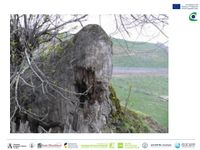 Resource: http://tripbama.com/fa/ Access : 18.04.2018
 -
add a caption


A.2 Summary of you landscape system analysis and your development Targets
- You can summarize your findings with an DPSI(R) Model or a Spider Diagram
- Link back to the Sustainable Development Goals: Which goals are at risk?
- What is your hypothesis for this landscape?
- Visualise your hypothesis with one graphic/pict
- Are there any existing initiatives taking action in this landscape? Do you have a critical perspective on that?
- Add text and visuals
-
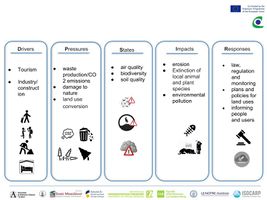 explain your analysis briefly in the caption

-
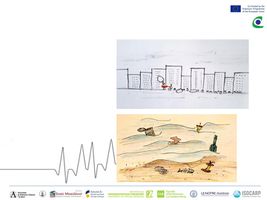 If the current situation goes on, more and more agricultural lands will be changed to commercial and residential buildings and based on low functional management, results such as air pollution, water pollution, low diversity and decrease of health of the society would occur.BUT by having a multi aspect planning and a functional management system, considering precious natural resources and future generation, Nur can become one of the great tourism poles of Iran.


A.3 Theory reflection
- Reflect on at least three international policy documents in relation to their local landscape case
- choose one international, one European and one national document
- You can choose references from our reading list
- Scope: 250 words
A.4 References
- give a full list of the references you have used for this section
Phase B: Landscape Evaluation and Assessment
B.1 Assessment Strategy
- Based on the hypothesis derived from your previous landscape systems analysis you are now asked to define the goals for assessing the landscape. Your assessment is the basis for evaluating the landscape status.
- Which elements and phenomena need to be mapped, why and how?
- This a text contribution, max 250 words
B.2 Mapping
- As defined by your assessment strategy you conduct the mapping and present your findings here
- As a minimum, at least three different themes need to be mapped, you may choose more if needed
-
briefly explain the findings of your mapping
-
briefly explain the findings of your mapping
-
briefly explain the findings of your mapping


B.3 Problem definition and priority setting
- Give a summary of the major findings of your mapping process, what are the problems/potentials identified?
- Draw a problems/potentials map
- Set priorities for the most relevant issues
-
add caption here

B.4 Theory reflection
- Please reflect the assessment and evaluation methods used based on at least three readings
- Did you encounter limitations'
- 200 words test contribution
B.5 References
- give a full list of the references you have used for this section
Phase C – Strategy and Master Plan
C.1 Goal Setting
- Define strategic planning objectives based on the evaluation findings
- Link back to your original targets from section one and the Development Goals
- 150 words text contribution
C.2 Spatial Strategy and Transect
- translate your strategic goals into a vision
- develop a spatial translation of your vision
- exemplify your vision in the form of a transect with concrete interventions
- add map(s) and visualizations
-
add caption here
-
add caption here
-
add caption here
-
add caption here


C.3 From Theory of Change to Implementation
- For implementing your vision: Which partnerships are needed? Which governance model is required?
- Who needs to act and how? Draw and explain a change/process model/timeline
- Which resources are needed? On which assets can you build?
- add 150 words text and visuals
-
add caption here
-
add caption here


C.4 References
- give a full list of the references you have used for this section
D. Process Reflection
- Reflect in your intercultural and interdisciplinary team on the outcomes of your study
- Which limitations were you facing?
- What have you learnt from each other?
- What would you do differently next time?
- You can also use diagrams/visuals
- 250 words text